
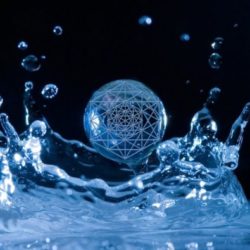
Life is not static or inert. Life is, well…
Alive!
Living and active.
Even death and the processes of decay are active and full of vitality- from the living bacteria and microbial life that breaks down and composts matter to the relations that are touched by death: the sense of loss, grief, and all the emotions that accompany-
All of life (conception and birth through to death) is alive and moving along the passage of time with frequency.
Everything in nature has frequency.
Sunrise and sunset, day and night, the seasons, the cycle of the moon, life and death, aging, the solar year, and so on…
The harmonics of life deeply involve frequency.
Oxford dictionary defines frequency as-
-
the rate at which something occurs or is repeated over a particular period of time or in a given sample.
-
the rate at which a vibration occurs that constitutes a wave, either in a material (as in sound waves), or in an electromagnetic field (as in radio waves and light), usually measured per second.
Frequency is woven throughout every level, range, layer, field, scale, and scope within the harmonics of life- from unseen and imaginal through subatomic, molecular and cellular, to cosmic and galactic-
Frequency is present
Other words within the harmonics of life share similar meaning and value. Such words are rhythm, beat, pulse, and cycle.
These words basically allude to the same ideas, yet their reference or framework generally applies to a varying range in scope or scale.
For instance, as suggested in the previous definition, frequency commonly refers to wave cycles per second. Whereas rhythm and beat include the word tempo and refer to beat or pulse per minute.
Cycle can be expanded in use for larger considerations of time and chains or phrases of reoccurrence- such as lunar cycle, seasonal cycle, annual cycle, etc…
For our appreciation and comprehension, we will allow frequency to include all of these meanings and words.
Just as much of what is musical applies and relates to all that is not technically musical instruments, performance, recording, or listening to the art of music; similarily, frequency applies to all of nature as well.
And on another level of consideration; comprehending and attending with frequency’s relations throughout nature allows for the conscious awareness of the “music” that is involved in the entirety of nature and all creation as well.
Appreciating the musical elements on expanded scales of perception allow for the senses and accompanying states of perception to perceive the harmonics of life more intrinsically- aiding in both the development of intuition and an expanded sense of connection.
This being said-
Frequency is more than sonic:
All the senses and sensory materia involve frequency relations. Frequency is multisensory.
Light is frequency and the color spectrum is based on varying frequency values. Just as halving frequency in music produces a tone that is one octave down, a similar action can be applied to light that halves frequency over and over until the frequency itself becomes within the range of audible hearing.
Although this may be simplistic and there are most likely other variables that occur between the transition from light to sound, perceptually, this is a harmonic relationship and the fractal considerations of the harmonic series existent in nature apply.
The visual light activity and color range of lightning are harmonic to the timbre and tonal frequency of the sound of thunder. In fact, they are one that is expressed through different frequecy ranges.
From this perspective and consideration, color has sound and sound has color. Going from the frequency range of light into the frequency range of sound takes dividing in half at least 40 times in order to go from billions of waves per second to maximum 1000 waves per second.
The below is an example of frequency color relations of sound in two tuning ranges:
IN 432hz/440hz
G – 96 22/98
192.43/196 – DARK RED
G# – 101.94/103.83
203.88/207.65 – RED
A – 108/110
216/220 – ORANGE
A# – 114.42/116.54
228.84/233.08 – YELLOW
B– 121.23/123.47
242.45/246.94 – GREEN
C – 128.43/130.81
256.87/261.63 – GREEN
C# – 136.07/138.59
272.14/277.18 – SKY BLUE
D– 144.16/146.83
288.34/293.66 – Navy BLUE
D#– 152.74/155.56
305.47/311.13 – Indigo
E – 161.82/164.81
323.63/329.63 – Purple Violet
F – 171.44/174.61
342.88/ 349.23 – Dark Purple
F# – 181.63/185
363.27/369.99 – Purple Black
Observing the relationship of frequency between light and sound (or hearing and vision) allows for a generalization of concept into the other senses as well-
Touch and tactile perception has frequency
Taste and flavor has frequency
Smell and odor have frequency
And all of these distinct ranges of frequency correspond with the harmonic series existent in nature, and, therefore, also co-represent each other. Meaning-
Touch frequency can be represented in sonic and visual frequency…
Taste and smell can be represented in terms of the other senses as well…
There are harmonic relationships between and amongst the senses similar to the overtone series in harmonics.
You are invited to:
- explore listening to the food you taste and smell,
- practice envisioning the colors of music and sound you are listening to (notice what sights and colors stick out during the listening experience)
- Hear and see touch and tactile stimulation (what colors are becoming accented outside the body? What sounds and colors present themselves within the thoughts?)
- Explore the perception of frequency in the realtions of the outside world, within the patterns and events of life, and within the body